PT 2 Life Cycle of Tournaments: Ruleset and Staff
- Belverly

- Feb 11, 2023
- 8 min read
Updated: Feb 13, 2023

Ruleset and Staff definition
Now that you have your planning phase done, you can now begin to write out your rule set for your tournament and recruit all of the proper staff. To break up the length of the article, all production staff will be discussed in part three.
My goal for this article series is to discuss various parts of the tournament process in depth for those wanting to host tournaments, play in tournaments, or sponsor tournaments. Feel free to hop around the article using the table of contents and ask questions in the comments.
Point of view note: this overview is written from the tournament administrator's viewpoint. My insight will be slightly different than someone in production or as a tournament platform provider. My background is also primarily with OW, RL, Valorant, COD, LOL, and Apex.
Part two: Rule Set and staff definition (this Article)
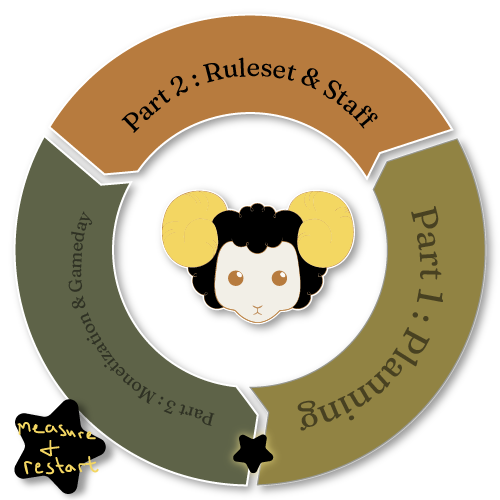
Feel free to use the Table of Contents to jump to specific sections.
Table of Contents
Ruleset
Rulesets for tournaments is a document that contains all of the information involving competitive integrity, and the backbone of any great tournament is truly the ruleset. Never underestimate the importance of a well-written ruleset. It's helpful to organize by rule topic and here are some considerations that make a ruleset great.
Start with the tournament information that you previously planned so that players can view in a single glance--the title of the tournament, the game, the date, the bracket type, and region/rank restrictions.
You may have noticed I use a table of contents for all of my articles. This is from my days of writing very long and detailed rulesets. If your rules are longer than one page, I suggest you make a TOC with links to the sections. Players need to be able to navigate the rules quickly during the tournament.
Prize pool, who wins what, how long after winning is it remitted, how will the money be remitted.
Explain the registration process (where is it being hosted, what information is needed, etc.) Include any deadlines
Explain how teams/players will be placed into their brackets and how brackets will operate. Not everyone will understand what a round-robin to DE means. You definitely don't have to write it in detail, but including an example graphic or a link to the real bracket you intend to use will be enough. Include if the F2# or Bo# changes and when it changes.
Explain any lobby settings, map rotations, weapon bans, hero bans, or any other considerations players need to play under. Many tournaments have gentleman rules or banned items to make the competition more enjoyable.
Explain what will happen if a team no-shows and how bracket byes work.
Explain time-outs, pauses, and what should happen if a player disconnects.
Explain how to report scores. If you are using a bracket on a tournament website, note if players or scorekeepers will be uploading the scores. Say if you require screenshots of the scoreboards.
Streaming clauses are important to include even if you are not broadcasting the tournament. It will be impossible to enforce players streaming their POV or not but encourage a specific time delay.
Explain that streaming without a delay may result in stream-snipping (cheating by watching your competitor's POV live) or may affect the players' ping while playing. Explain how you will respond to either case.
personally, I put the clause in and explain that the player accepts all liability for stream sniping or disconnecting if they chose to stream.
Morality clauses never hurt to include for most tournaments. These clauses can include 0 tolerance for hate speech in-game or on socials. It can also include things like tea-bagging in the game. Include what will happen if a player/team is caught breaking the morality clause AND how to report issues. How strict my morality clause greatly depends on the audience that I am working with and the brands that I have partnered with for the tournament.
I encourage my players to pause the game and ask for a moderator to join the teams' voice call or lobby chat immediately for infractions reporting. Depending on the infraction and the tournament, I will then remove the player or remove the entire team from the tournament. It acts as a forfeit and the other team gets a bye.
Some players will wait until the tournament is almost over to report things. It's very difficult to provide screenshots for proof or to remove the teams from the tournament at that time so stress the importance of reporting things immediately.
The "Right To Edit" Clause is the final clause that I always add. This allows my team to edit and update the ruleset with information as it is presented to us. I mark at the top of the document when it was last edited, and normally mark changes somehow.
Finally, include all of the important links, logos, and other information that didn't really fit anywhere.
Socials of your organization, any partners, and sponsors.
Your registration link, discord, and bracket link.
Note where people can ask questions or voice concerns.
Once you have drafted your ruleset, have your entire staff review the document. Not only can they check for errors and clarity, but make sure your staff understands the rules and procedures for the tournament. The staff can also make recommendations of things they see missing or that need information expanded on.
Example Rulesets
These rulesets are tournaments that I have personally been involved in either as a tournament organizer/admin or a graphic artist.
Rulesets from popular community tournaments
Bandits on Wheels - Liquipedia - start.gg
Tournament Hierarchy
As previously mentioned tournaments take a lot of people to make an event successful. This article will focus on the administrative side of tournament hosting. To read more about the production and streaming staff, please check out Pt 3 of Life Cycle of Tournament. While Admin and Production can operate independently, both teams should collaborate to ensure a smooth event.
Below is the staff that will be operating the tournament from an organizational standpoint. Many tournaments in their first season are run with volunteers or run with a very small budget and e titles will be condensed. For example, Tournament Organizers may act collectively to cover all moderation and scorekeeper needs. There may also be no tournament administrator if the organizers are acting as a team.
Hierarchy in written form: click each list to expand
Tournament Admin side
Tournament Administrator (TA)
Tournament Organizer (TO)
Moderator (Mod)
Score Keeper
Team Manager Team Captains
Players Competing in the Bracket
Tournament Production side
Tournament Technical Director (TD)
Producer (Prod)
Observer Director (OBS Dir)
Observer 1 (obs 1), observer 2 (obs 2), Replay obs, bird's eye view, map view, etc.
Talent Manager
Host
Shout-casters
Play by play
Color or analytics
Hybrid
Team Manager/Team Captains (to get teams into the production lobby)
Players competing on the broadcasted portions.
Staff Scope of Work
Here are standard definitions and the scope of work that each staff member does. Not all roles listed are needed for a successful tournament. Additionally, multiple roles can be condensed or expanded depending on the scale of the tournament. This list is not intended to be exhaustive.
Tournament Administrator (TA)
There is normally only one Tournament Administrator and they are the lead manager of the tournament. The bulk of TAs job is managerial and during the planning stage. They are responsible for planning out the tournament in detail. To read more about the planning stage, read part one of this series.
They often recruit and manage staff beneath them including broadcasting staff if there is not a technical director.
TAs can be as active as Tournament Organizers during the planning stage, and the live event. Sometimes, TAs will delegate event management to the Tournament Organizers.
This member is acting as the final decision-maker on all aspects of tournament operations, especially when staff cannot agree on the direction or punishment for rule-breaking.
Tournament Organizer (TO)
Tournament organizers are often the first point of contact for players during tournaments. As previously mentioned, TOs can act as moderators and scorekeepers, and even marketing specialists in smaller tournaments.
TOs primary job is to make sure players are playing when they should, announcements about matches are timely, and competitive integrity is maintained.
They are the staff that will make the decisions if rules are broken and what the punishment will be. TOs can override rules at their discretion if they find a particular rule is not working as intended.
Tournament Organizers will make the final decision if moderators cannot decide or need guidance on punishment for rule-breaking.
Moderator (Mod)
In addition to Tournament Organizers, Moderators help manage the community and their questions. The day of the tournament and during the tournament will be the busiest time for communication from players and extra help will be needed!
Moderators can direct players to the correct links for rules, brackets, and sections in Discord.
Moderators will also be performing Discord-specific duties like giving players permission, moving people, or creating new channels or roles as needed.
Finally, moderators have the important job of managing communication on social channels for protection against trolls, and bad sportsmanship, and escalating reports as needed to Tournament Organizers.
Scorekeeper
Scorekeepers are the staff member responsible for ensuring scores are factual and quickly updated, and managing any disputes over scores.
Scorekeepers need to know the ruleset to make sure that teams are competing in the show matches properly and that team scores reflect the proper format.
Sometimes, players report their own scores either on the website or in a Discord channel. At that point, the scorekeeper's duties are to handle score disputes or questions.
Marketing and/or Partnership Specialist (MS / MP)
A marketing Specialist is a staff member who oversees all marketing. MS will plan out a marketing strategy to implement, including live tournament announcements. Marketing is incredibly important for the success of the tournament and should not be ignored. Marketing ensures that enough players sign up for the tournament and enough viewers come to the live event. Additionally, your marketing efforts and engagement drive what kind of partnerships and sponsors your organization can land.
Included in the marketing strategy is a list of graphic assets needed for socials, the rulebook, and other various uses.
a Partnership specialist oversees sponsorship deals and partnerships with other organizations. Sponsors are important to help fund the budget of the tournament and the prize pool for the winners. Partnerships with other organizations can ensure enough players will register. Other organizations can also bring their own staff to augment your staff.
Graphic Artist (GFX)
The Graphic Artist is responsible for creating all creative graphic assets for the tournament. This can include streaming assets, marketing assets, and tournament registration graphics. Depending on the skill of the artist, this can include animated and short videos.
Team Manager
Team Managers are external staff provided by the competing teams and are normally the point of contact for the team. Team managers will often support competing teams by finding them practices, new trial players, and tournaments to play in, and provide moral support.
Team Captain
Instead of a team manager, some competing teams opt to use their team captain as a point of contact. Team captains act as leaders for their teams both in and outside of competitions.
Players competing in bracket
Players either compete individually (one-on-one), as free agents put on teams, or in premade teams within your tournament system. Each game title has its micro-culture to expect from its players.
For example, RL players will not want to use your discord for voice calls and they will want to sign up at the last possible second. I mean an hour before the tournament, the last second.
OW players are very particular about the map order.
COD players have specific gun lists they want to be banned and can be very opinionated about which list is correct.
Valorant players (I love you guys, I do) will quit when they see their team won't make it past a certain point.
LOL players must see their opponent's OP.gg links.
Now that you know what a solid rule set is, and what each staff role is in the administrative side of tournaments, we can discuss part 3: monetization in-depth, production for streaming, and gameday considerations.
Want to learn more about tournaments?
Part two: Rule Set and staff definition (this Article)



Comments